
4-Season Sunrooms: A Real Room, Not Just an Enclosure
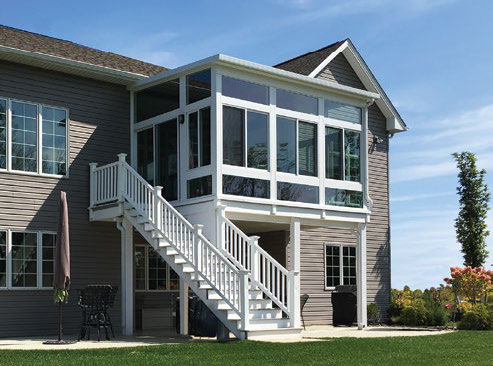
A 4-season sunroom isn’t a porch with upgrades. It’s a fully insulated room with glass walls that ties into your home’s heating and cooling system. You use it in January when there’s a foot of snow on the ground. You use it in August when it’s 90 degrees. It’s a year-round living space, and in a state where outdoor time is limited by weather for half the calendar, that matters.
M2 Decks & Enclosures installs Betterliving 4-season vinyl sunrooms for homeowners across 14 Wisconsin counties. We’re based in Mukwonago and we build these rooms from Kenosha to Sheboygan, Janesville to Fond du Lac. If you’ve been thinking about adding square footage to your home without the full cost and disruption of a stick-built addition, a 4-season sunroom is worth a serious look.
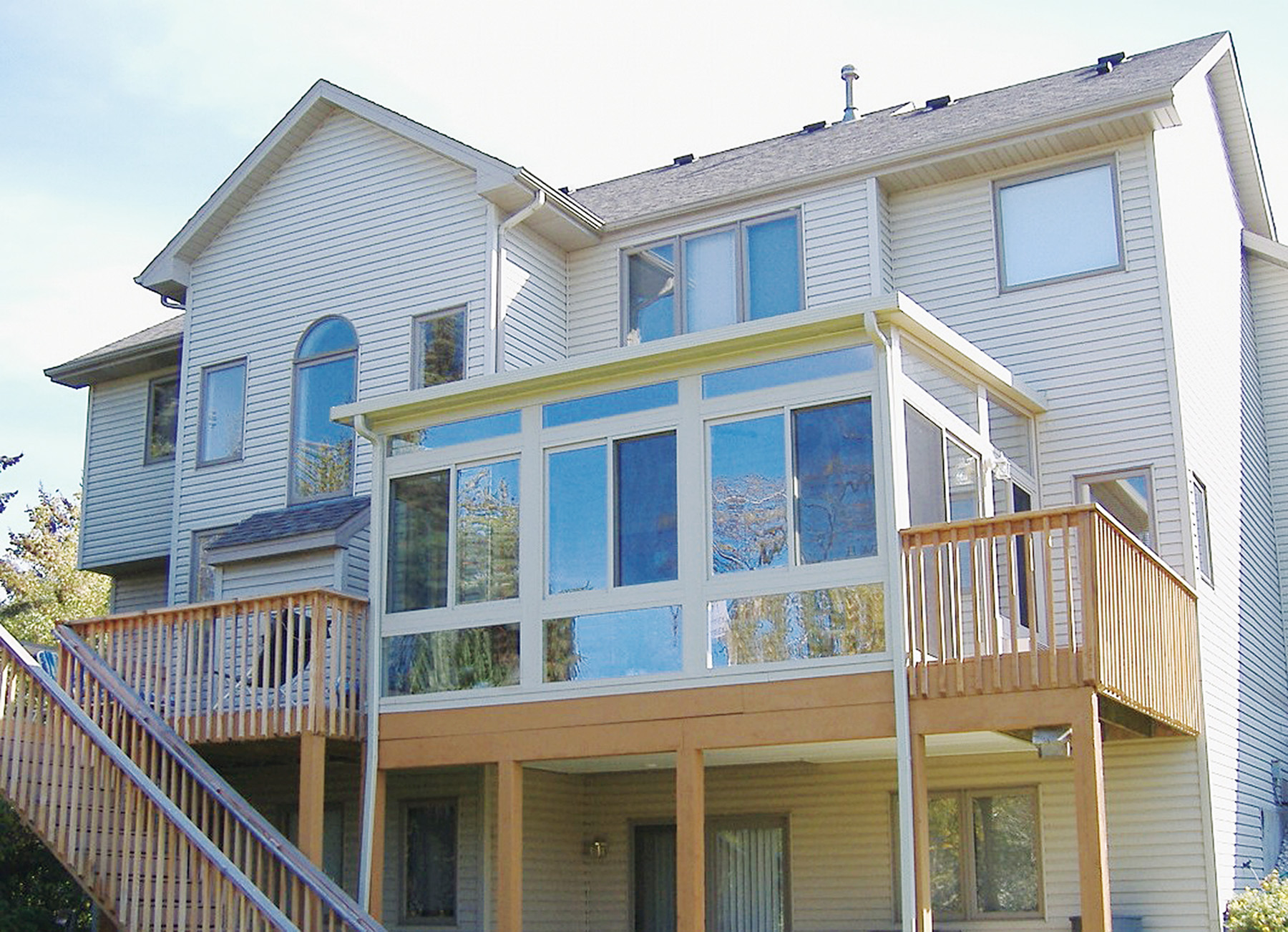
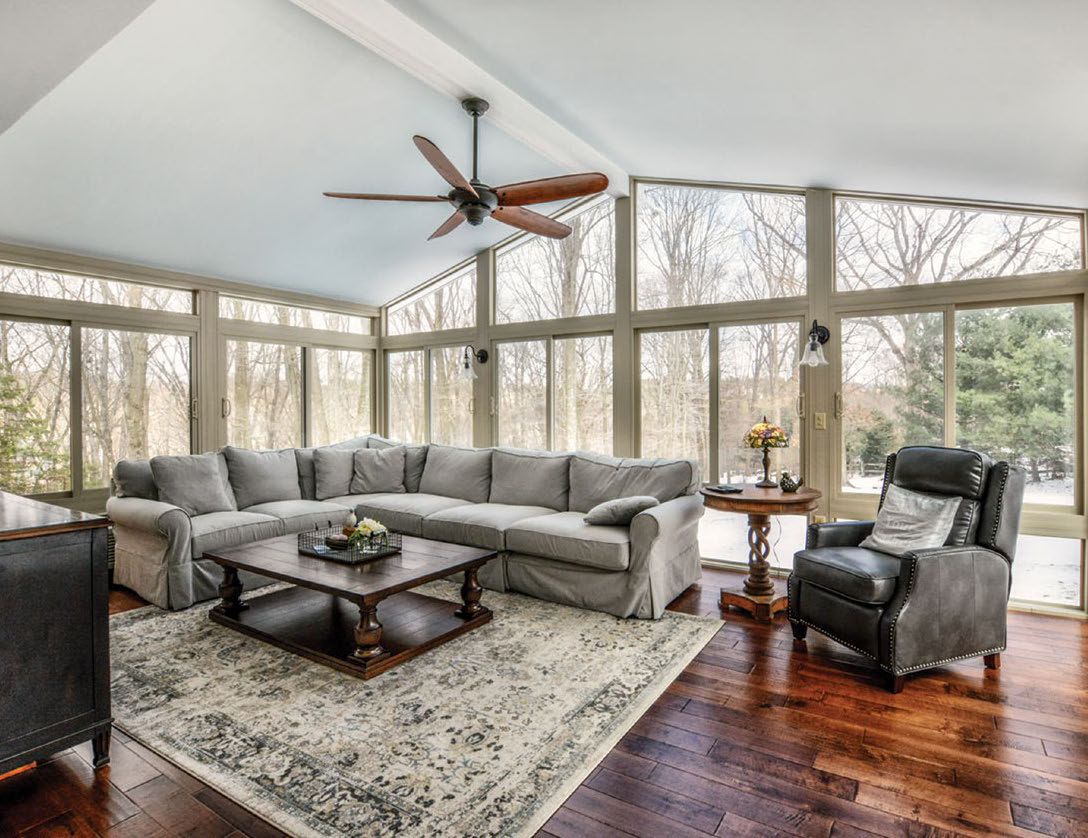
Engineering That Handles Wisconsin Winters
The Betterliving 4-season system uses wall sections that are 4 inches thick or more, built from vinyl reinforced with aluminum and steel. That’s a structural system, not decorative trim. The walls resist thermal transfer, which is how you keep a glass-walled room comfortable when it’s minus-10 outside.
Standard glazing is Betterliving 366 Glass — Low-E argon-filled double-pane units. The 366 coating reflects heat back into the room in winter and blocks solar heat gain in summer. For Wisconsin’s climate, where you’re dealing with both extremes, this glass does real work.
Frame colors are White and Desert Sand. The vinyl framing doesn’t need painting, doesn’t rot, and doesn’t conduct cold the way aluminum does. That’s a meaningful upgrade over a 3-season aluminum sunroom if year-round use is your goal.
Everything carries a 50-year transferable warranty.
What You Can Actually Do With the Space
The most common question we get from homeowners in Brookfield, Waukesha, and New Berlin is: “Can I really use it in winter?” The answer is yes — with the right HVAC connection.
We’ve built 4-season sunrooms that serve as:
- Exercise rooms (treadmill with a view beats a basement wall)
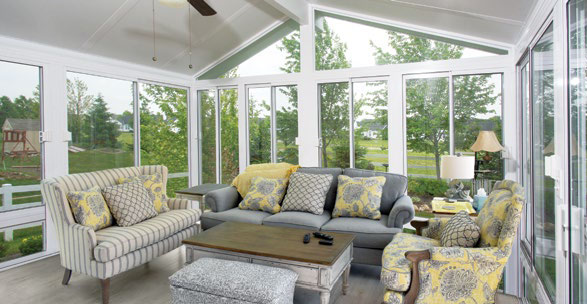
- Year-round dining rooms with panoramic views
- Home offices with natural light all day
- Family rooms and play spaces
- Indoor garden rooms and plant conservatories
The Betterliving 366 Glass manages temperature and UV, but the ceiling is just as important. The Ceiling Plank System comes in eight finishes — Rustic Pine, Natural Cherry, Bamboo, Weathered, Beadboard, White Wash, Classic White, and Painted White. A finished ceiling insulates and makes the space feel like part of the house, not an afterthought.
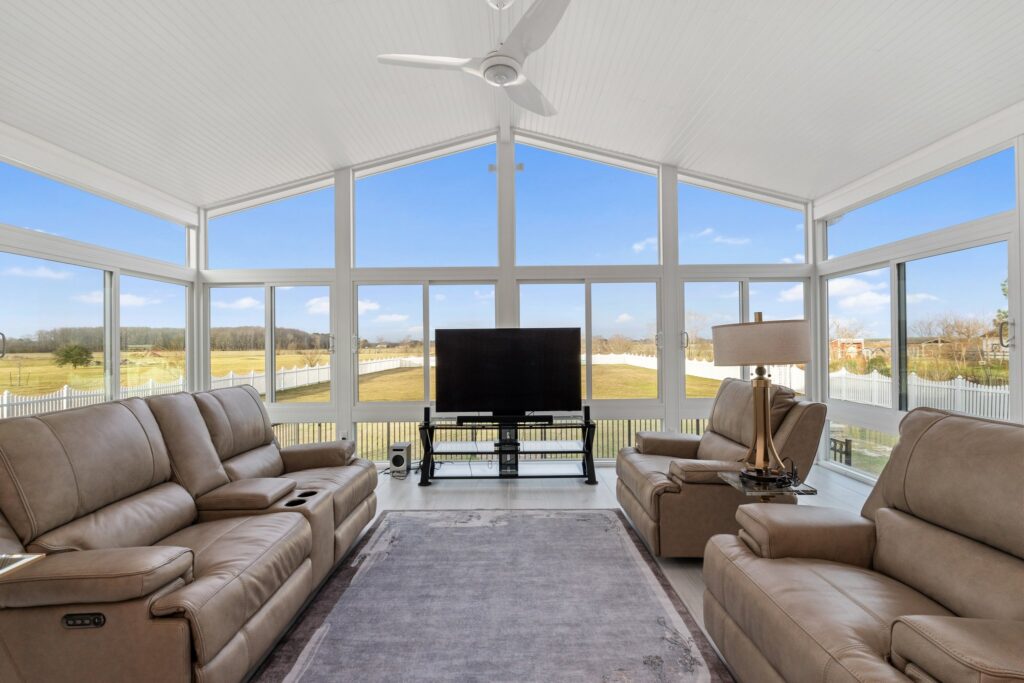
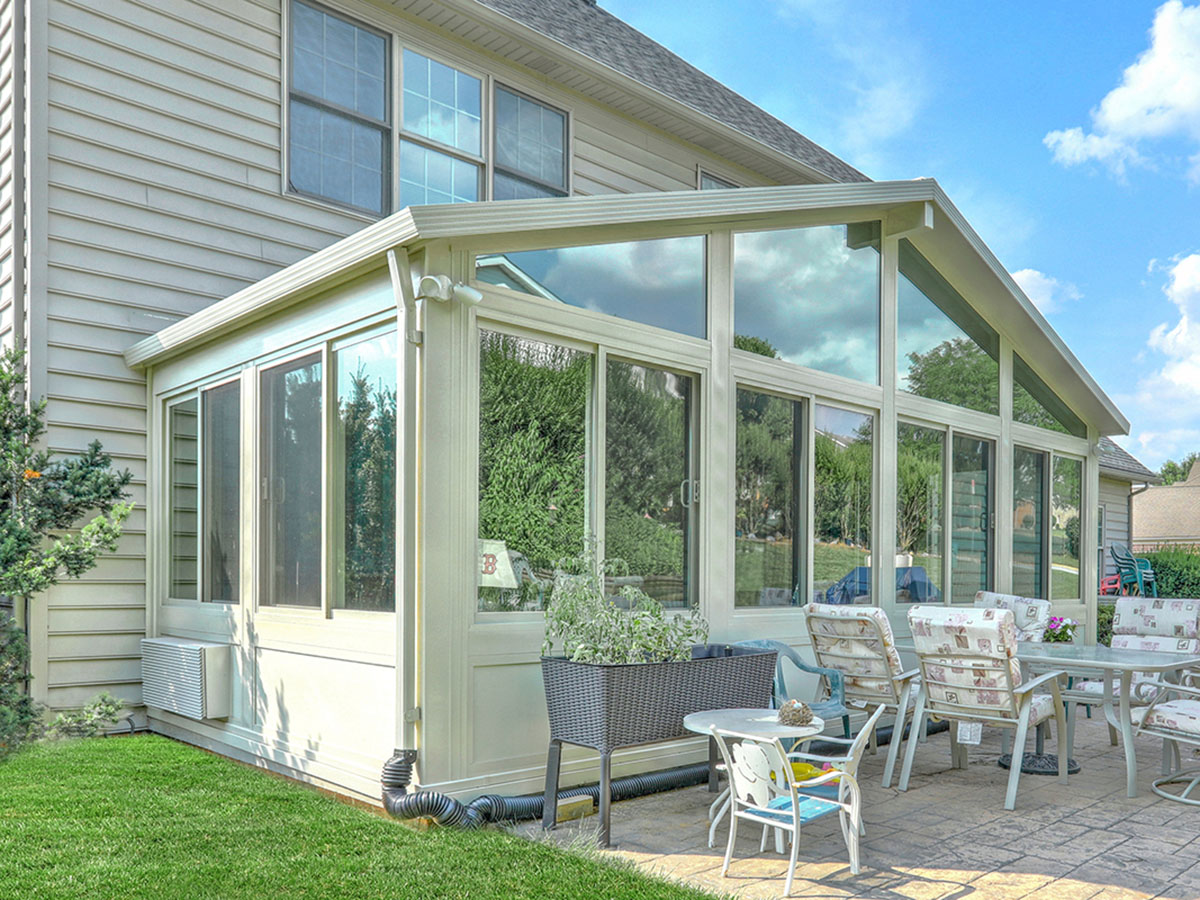
How It Connects to Your Home
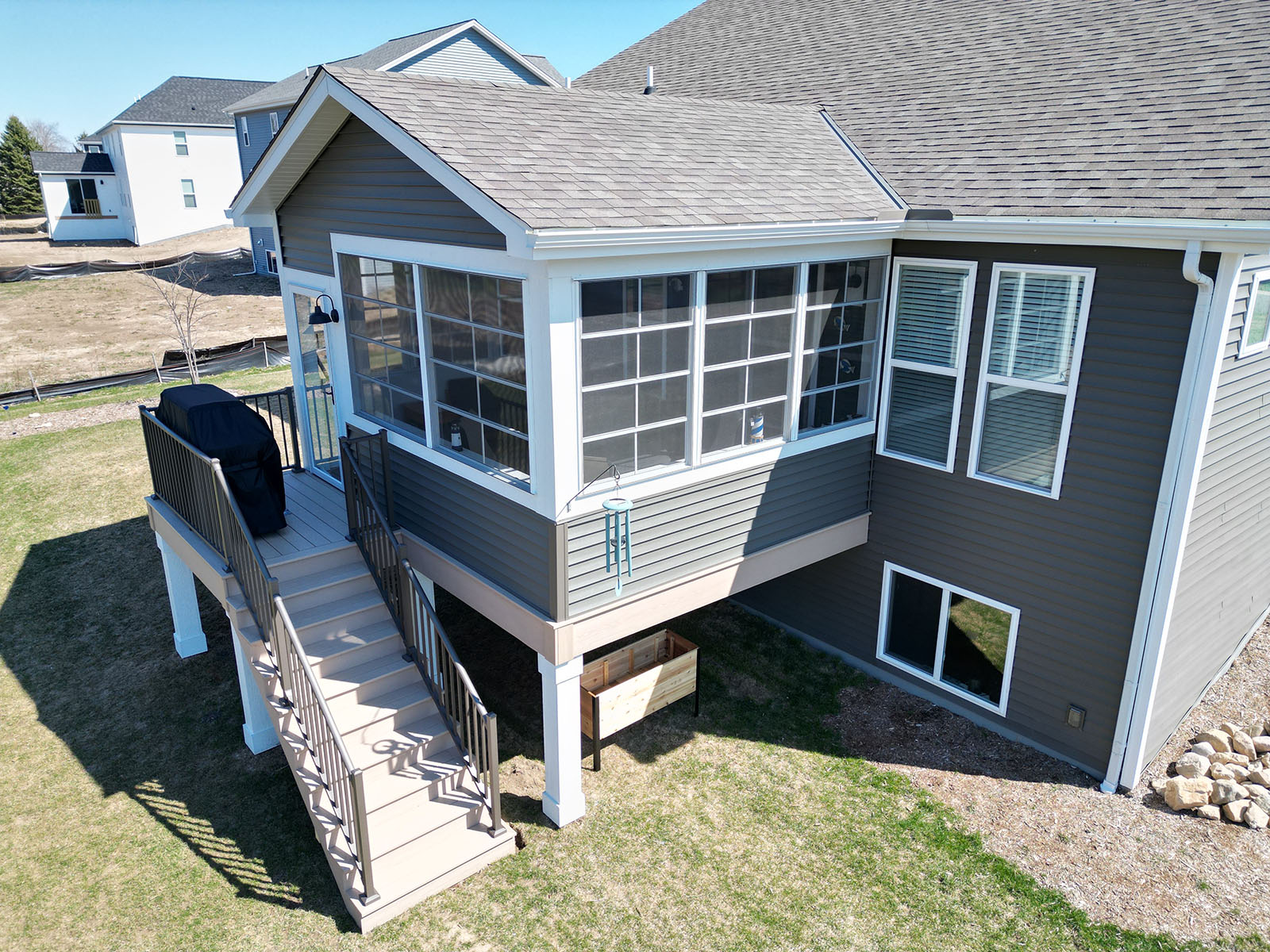
A 4-season sunroom ties into your existing structure. We remove the exterior wall section where the room connects, match the interior transition, and integrate the space so it flows naturally from the rest of your house. Most homeowners extend an existing HVAC duct or add a mini-split for heating and cooling. We’ll discuss the best approach during your consultation.
This is one area where our experience matters. We’ve done this across every type of home — ranches in Muskego, colonials in Delafield, split-levels in Pewaukee. The connection between old and new has to be done right, and we make sure it is.
4-Season vs. Full Addition: The Cost Question
A conventional stick-built addition in southeastern Wisconsin typically runs significantly more per square foot than a Betterliving 4-season sunroom. The modular system — manufactured in Souderton, PA, and assembled on-site — cuts labor time and material waste. You get an insulated, glass-walled room with a structural roof faster and at a lower cost than traditional construction.
That said, a sunroom isn’t a full addition. It’s a specialized space with a lot of glass. If you need a room with solid walls and conventional windows, that’s a different project. But if you want light, views, and a connection to the outdoors with year-round comfort, a 4-season sunroom delivers.

Frequently Asked Questions
4-Season Sunroom Gallery
Ready to Get Started?
Call M2 Decks & Enclosures at 414-491-9334 or get a free quote below. We design and install 4-season sunrooms across Columbia, Dane, Dodge, Fond Du Lac, Jefferson, Kenosha, Milwaukee, Ozaukee, Racine, Rock, Sheboygan, Walworth, Washington, and Waukesha counties. Let’s talk about what this space could look like on your home.