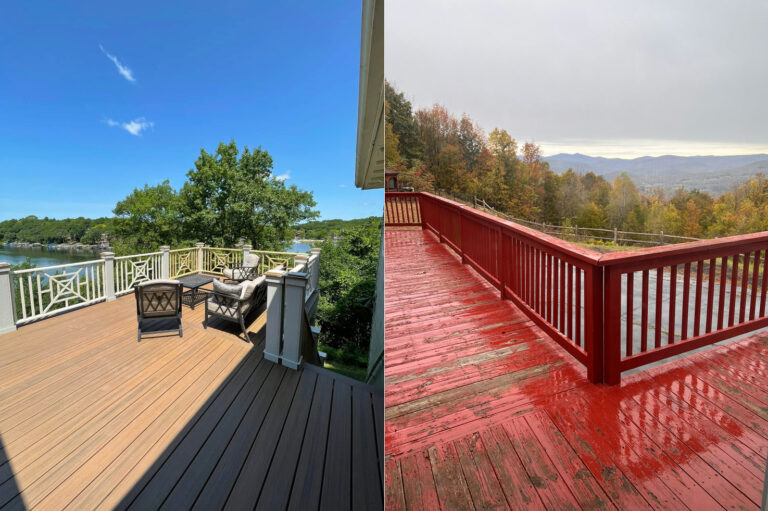
It’s the first warm weekend of spring, and you’re ready to free the outdoor furniture from its dusty storage prison and start enjoying your deck again. But before you can settle in with a festive beverage and catch the Brewers game, you realize winter has assigned you a few unwanted to-dos. On your wood deck, which looked so inviting just a few months ago, you see warped boards, new cracks, and a protective finish in serious need of attention. And just like that, your first weekend outside is about maintenance rather than enjoyment.
This unpleasant spring surprise highlights one of the biggest differences between traditional wood and TimberTech composite decking. Both might look equally beautiful on installation day, but they don’t respond to Wisconsin weather the same way. Wood depends on surface protection that must be reapplied over time, while TimberTech storms into winter with its moisture-resistant cold-weather armor built directly into the boards.
That advantage means fewer repairs, less maintenance, and more time and money saved over the life of your deck. As a TimberTech Platinum Installer serving southeast Wisconsin, we build decks for exactly these conditions. So, to understand why composite is king, let’s start with what repeated freezing and thawing can do to a deck.
Wisconsin’s freeze-thaw cycle tests every deck
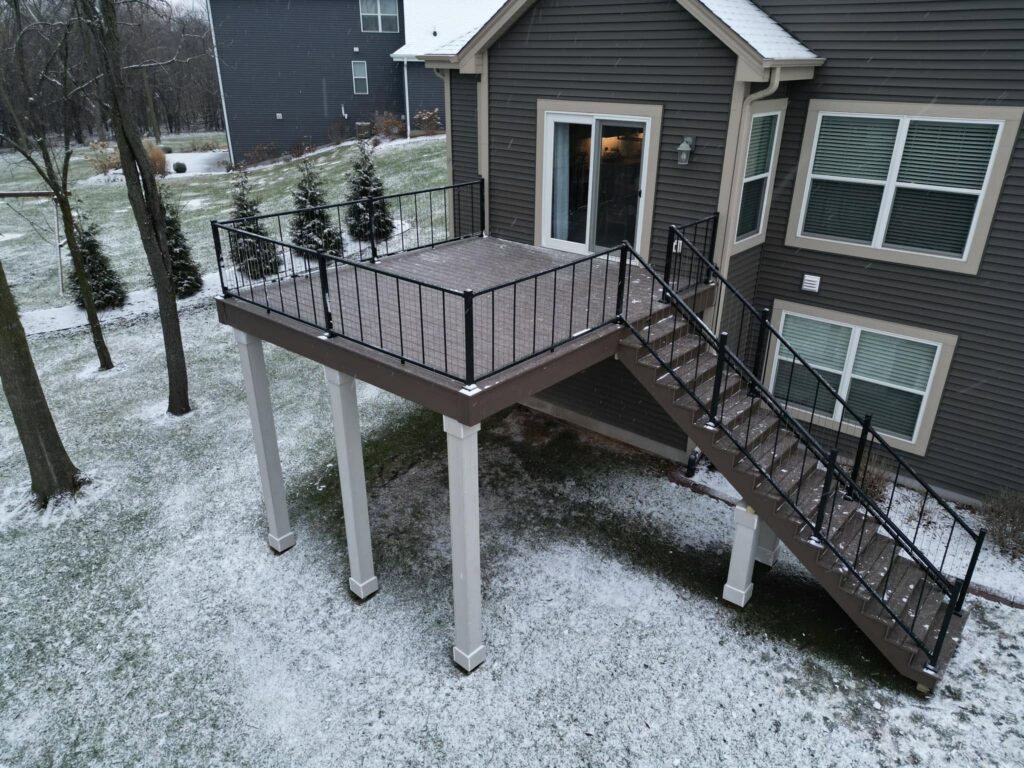
A Wisconsin winter doesn’t simply freeze and stay frozen. Temperatures frequently move above and below freezing, especially during late fall and early spring. A warm spell turns snow and ice into water, and the next cold snap freezes it again.
This repeated shift between liquid water and ice is called the freeze-thaw cycle and, depending on the severity of the winter, the pattern can recur multiple times each year. How well the decking material handles the cycle determines what greets you on that first warm weekend.
Why traditional wood struggles with water
Unfortunately, moisture is one of wood’s greatest enemies. The same natural structure that gives wood its warmth and character also makes it porous. Rain, melting snow, and humidity all expose the wood to moisture, especially as the protective finish on the boards wears away over time.
But the real trouble starts when that moisture manages to find its way inside the wood. When the water freezes, it expands, placing pressure on the wood from within. Over time, this can cause the boards to cup, warp, crack, or pull away from fasteners. And every new crack or split provides the moisture with a new pathway to seep deeper into the wood.
Of course, water can harm wood even when it doesn’t freeze. Damp boards are vulnerable to mold, mildew, rot, and insects. If the damage isn’t caught early enough, you’ll have to repair or replace the affected boards before the problem spreads.
Preventing these problems is possible, but it requires maintaining a reliable barrier against moisture. Traditional wood depends on stain or sealant applied to the surface, and that protection has to be restored as the finish breaks down.
How TimberTech wins against moisture
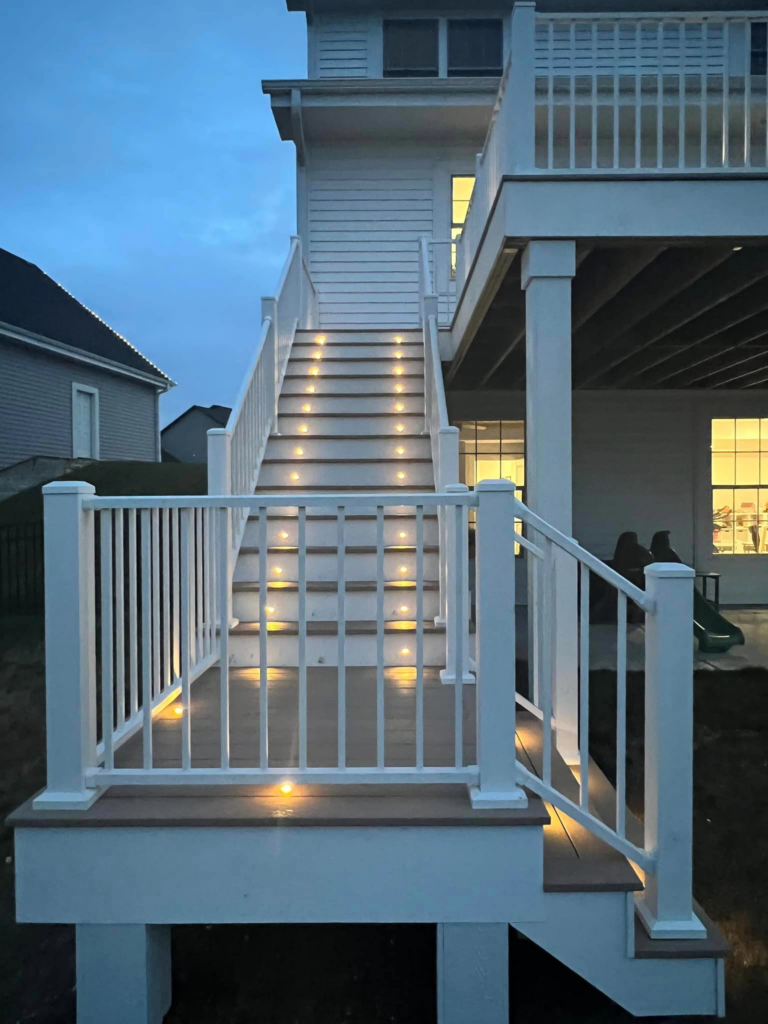
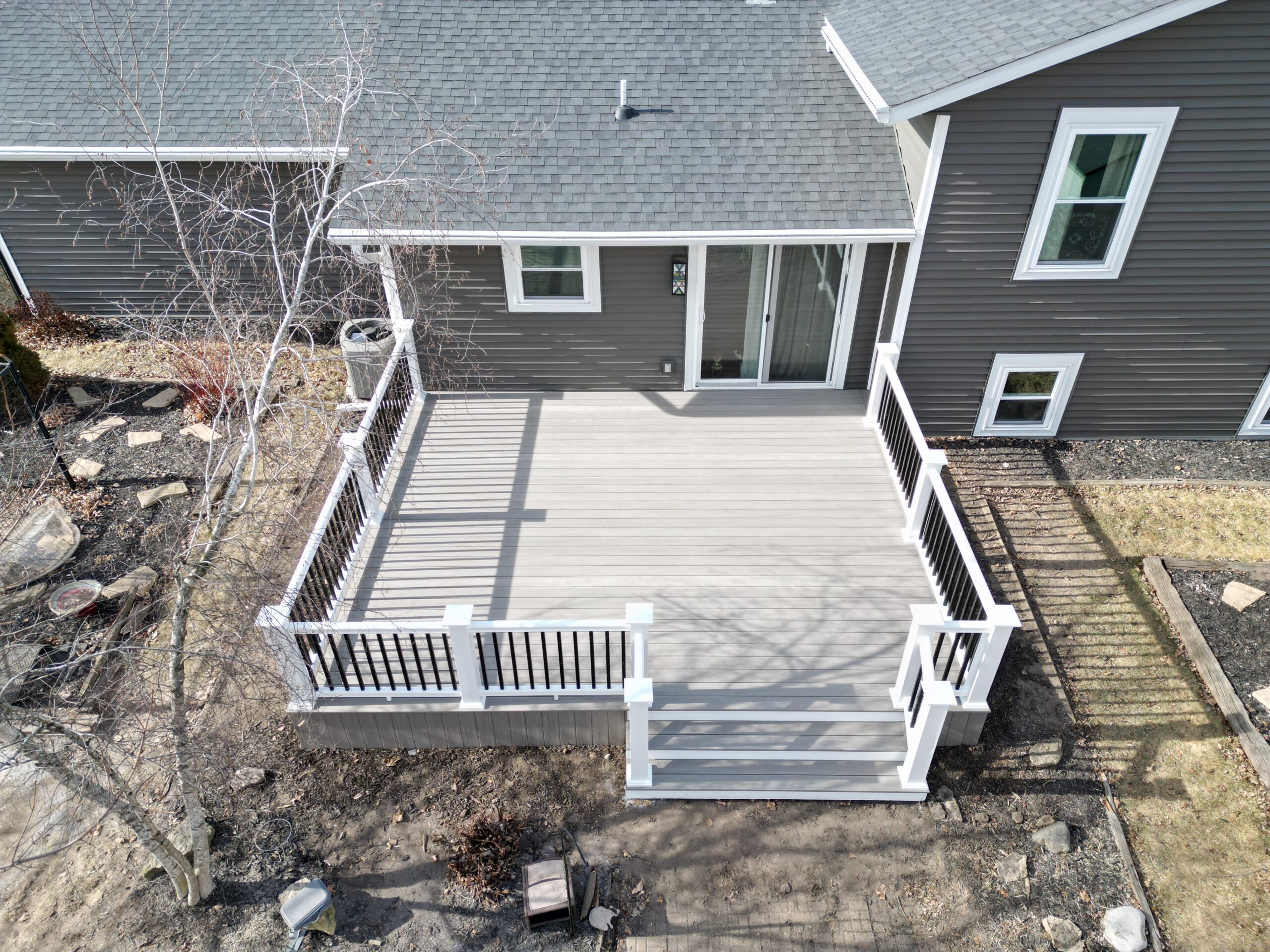
TimberTech composite decking builds moisture protection into the decking itself. It combines wood fibers and polymers with a durable protective cap, so less water enters the boards to freeze and cause pressure.
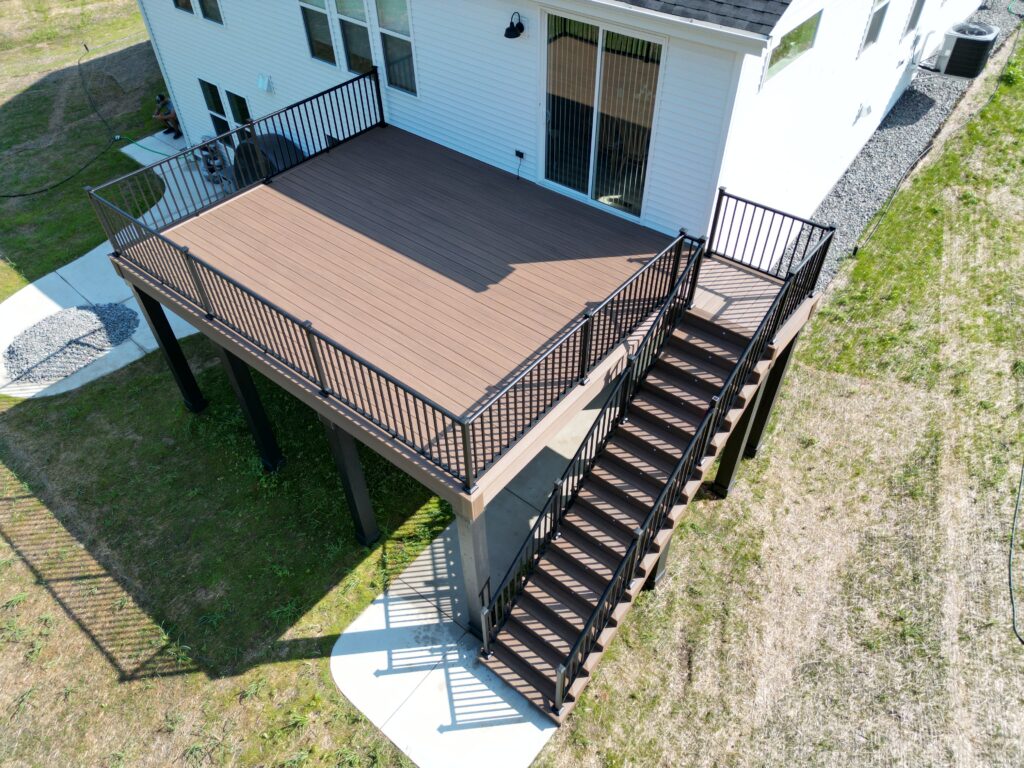
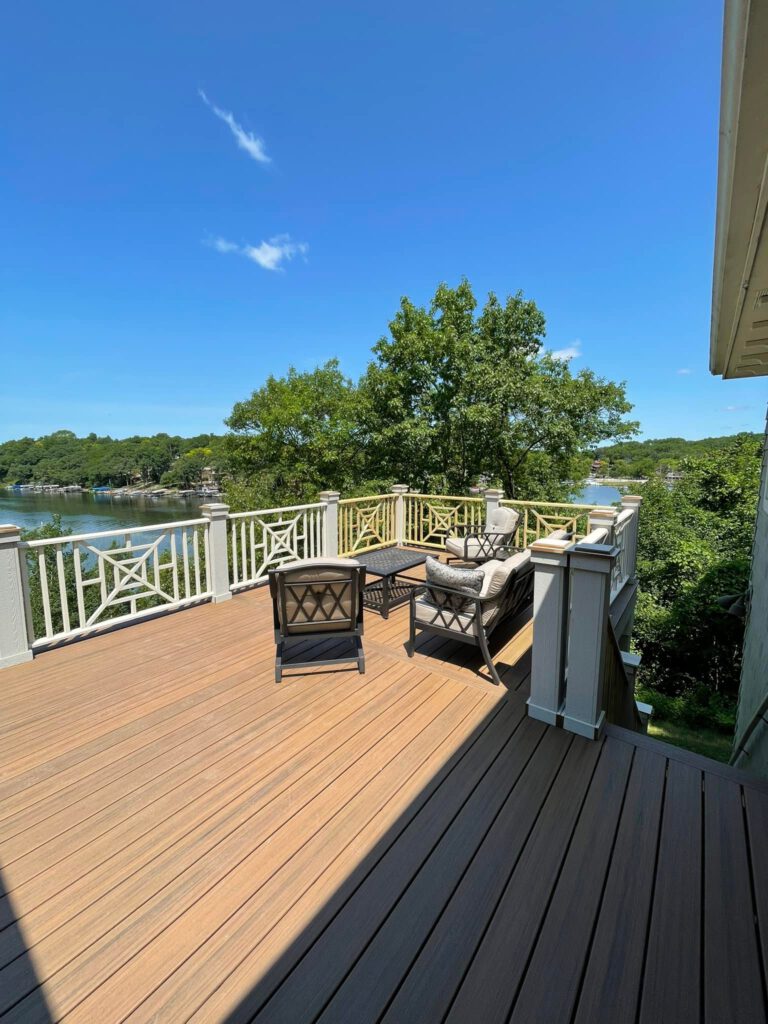
This makes TimberTech less vulnerable than traditional wood to damage from Wisconsin’s freeze-thaw cycles. Its cap also resists fading caused by ultraviolet rays, helping the boards maintain their color and natural-looking wood grain through years of changing seasons. The best part? That protection doesn’t have to be kept up through repeated sanding, staining, and sealing.
Still, your TimberTech deck will need a little attention when winter starts piling on the snow and ice. We recommend removing snow with a plastic shovel to avoid scratches and using a non-corrosive ice melt when you need additional traction. Even so, these simple precautions are much less demanding than having to restore a worn finish or repair moisture-damaged wood.
Which decking material saves more time and money?
A traditional wood deck can look like the better deal when it’s installed, but the initial price is only part of the long-term cost. Maintaining wood requires an ongoing investment in supplies, labor, and repairs.
Cleaners, sandpaper, stain, sealant, brushes, and other materials all add up over the lifetime of the deck. On top of that, you’ll need to replace cracked, warped, or rotting boards as the deck ages. And if you plan on hiring a professional to refinish the deck, don’t forget to add labor costs.
Doing the work yourself might save money, but the time cost can be substantial. Depending on the size of the deck, this is a job that can take an entire weekend or longer once prep and drying time are included. That timeline can stretch out even further if the weather changes halfway through your project.
TimberTech never needs to be sanded, stained, or sealed. Cleaning it with soap, water, and a soft brush a few times a year is enough to remove dirt and debris to help it keep looking its best.
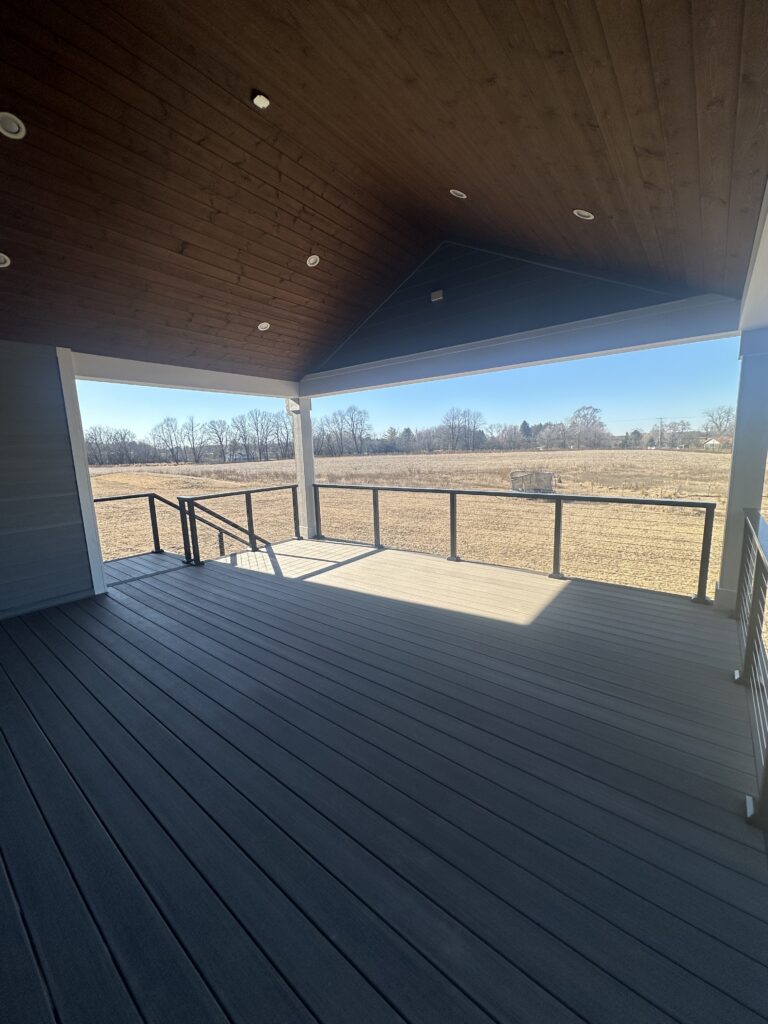
That simpler maintenance routine means fewer products to buy, fewer weather-related repairs, fewer weekends spent working on the deck, and a lot more weekends enjoying it! Although TimberTech can cost more upfront, those savings make it a far better value over the life of your deck.
Why composite is king in Wisconsin
Traditional wood can create a beautiful deck, but protecting it from repeated freezing, thawing, moisture, and summer sun takes work. TimberTech’s moisture-resistant, fade-resistant cap provides the cold-weather armor a Wisconsin deck needs without regular sanding, staining, or sealing.
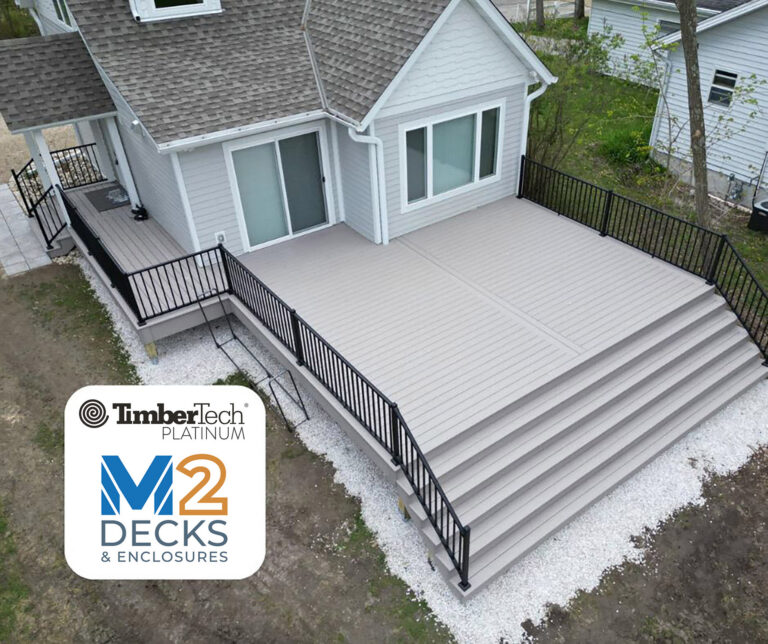
M2 Decks & Enclosures designs and installs custom TimberTech decks for homeowners throughout southeast Wisconsin. As a TimberTech Platinum Installer, M2 can help you compare colors and collections, select the right material to complement your home, and secure extended warranty coverage on the products it installs.
Ready to build a deck designed for Wisconsin weather? Get a free custom quote today!